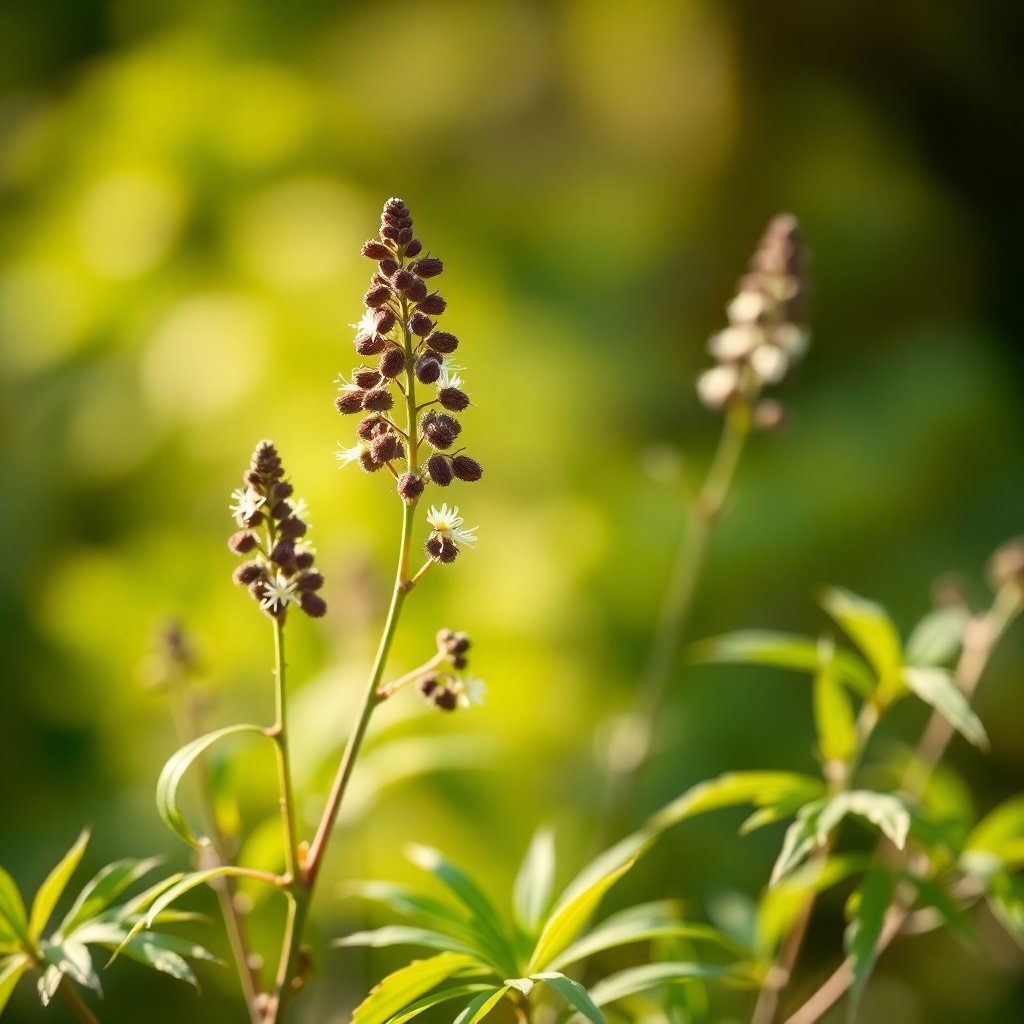
If you've spent any time researching perimenopause relief, you've almost certainly come across black cohosh. It's on every supplement shelf, recommended in countless forums, and has decades of anecdotal support behind it. But does the science actually back it up—or is it one of those herbs that sounds promising and delivers disappointment?
The short answer: black cohosh has real, peer-reviewed evidence supporting its use for hot flashes and sleep disruption in perimenopausal women—but the effect size varies, the mechanism is still debated, and product quality matters enormously. Here's everything you need to make an informed decision.
Medical Disclaimer: This article is for informational purposes only and does not constitute medical advice. Always consult your healthcare provider before starting any new supplement, especially if you have a history of liver conditions, hormone-sensitive conditions, or are taking prescription medications.
What Is Black Cohosh?
Black cohosh (Actaea racemosa, formerly Cimicifuga racemosa) is a flowering plant native to eastern North America. Indigenous peoples used it for centuries for gynecological complaints, and European herbalists adopted it in the 19th century. Today it's one of the top-selling botanical supplements for menopausal symptoms in both the US and Europe.
The rhizome (root) is the active part. Standardized extracts—typically standardized to 2.5% triterpene glycosides—are what most clinical trials have used. This matters when you're shopping: a random "black cohosh root powder" capsule is not the same as a clinically-dosed standardized extract.
What the Research Says
The clinical picture on black cohosh is more nuanced than either proponents or skeptics usually admit.
Hot flashes: Multiple randomized controlled trials show meaningful reductions in hot flash frequency and severity. A 2010 Cochrane review covering 16 trials found statistically significant reductions in vasomotor symptoms, though effect sizes were modest compared to hormone therapy. A 2021 meta-analysis in Menopause confirmed that standardized black cohosh extract reduced hot flash frequency by roughly 26% vs. placebo over 8–12 weeks.
Sleep quality: Several studies show secondary improvements in sleep disruption tied to vasomotor symptoms. If you're waking up 4x a night from night sweats, reducing those sweats improves sleep as a downstream effect—not because black cohosh is directly sedating.
Mood: Some trials report secondary improvements in anxiety and mood, possibly because sleeping better and sweating less through the night changes your baseline quality of life. The direct anxiolytic mechanism is weaker here. For mood and anxiety specifically, ashwagandha may be a stronger option.
What it doesn't do: Black cohosh does not significantly impact bone density, libido, vaginal dryness, or cognitive symptoms. It's a vasomotor symptom specialist, not a full perimenopause protocol on its own.
How Black Cohosh Works (Mechanism Still Debated)
For years, black cohosh was assumed to work like a phytoestrogen—binding to estrogen receptors and producing weak estrogenic effects. The latest research mostly disputes this. Current thinking is that it acts primarily on serotonin receptors (particularly 5-HT1A and 5-HT7), which influence thermoregulation and explain the hot flash reduction without direct estrogenic activity.
This matters clinically: if it doesn't act like estrogen, it may be safe for women who've been advised to avoid estrogen (e.g., certain breast cancer survivors). However, this remains under active study—do not self-prescribe on this basis without talking to your oncologist or gynecologist.
The Best Black Cohosh Supplements on Amazon (2026)
Not all black cohosh is created equal. These are the products with the best combination of clinical-grade standardization, third-party testing, and verified real-world reviews.
1. Remifemin — The Gold Standard
Remifemin is the most clinically studied black cohosh supplement in the world. It uses the Ze 450 extract (the specific extract used in the majority of clinical trials) standardized to 1 mg of triterpene glycosides per tablet. If you want the supplement that mirrors what researchers actually tested, this is it.
Dose: 20 mg twice daily. Most studies showing positive outcomes used this product or its equivalent.
→ Shop Remifemin Black Cohosh on Amazon
2. Nature's Way Black Cohosh Standardized
Nature's Way is one of the most reputable mass-market supplement brands in the US, with consistent quality control and third-party testing. Their black cohosh is standardized to 2.5% triterpene glycosides, 40 mg per capsule. Good bioavailability, widely available, and competitively priced.
This is a solid everyday option if Remifemin is hard to find or budget is a factor.
→ Shop Nature's Way Black Cohosh on Amazon
3. NOW Foods Black Cohosh Extract
NOW Foods consistently earns high marks for quality-per-dollar. Their 80 mg standardized extract (1:1 ratio from root) comes in a veggie capsule and is non-GMO verified. The 80 mg dose is on the higher end—some women find lower doses sufficient, so you could start with one capsule daily and assess before doubling up.
→ Shop NOW Foods Black Cohosh on Amazon
4. Solgar Black Cohosh Root Extract
Solgar's supplement line tends toward premium quality and careful standardization. Their black cohosh offering is 525 mg of root extract per capsule, standardized for consistent active content. Solgar is a brand with a long track record in the wellness community and carries Kosher certification.
→ Shop Solgar Black Cohosh on Amazon
5. Vitanica Women's Phase II (Black Cohosh Blend)
If you want a formulated approach—black cohosh combined with complementary botanicals—Vitanica's Women's Phase II is a well-regarded option. It pairs black cohosh with chaste tree berry (vitex) and other herbs traditionally used for perimenopausal transition. Vitanica is a women's health–focused brand founded by a naturopathic physician, and the formulations reflect that expertise.
→ Shop Vitanica Women's Phase II on Amazon
6. MegaFood Women Over 40 Multi (Contains Black Cohosh)
If you're still building out your supplement foundation, MegaFood's Women Over 40 Multi includes black cohosh alongside a full vitamin/mineral profile specifically calibrated for perimenopausal needs—including vitamin D3, K2, and B vitamins. It's a convenient all-in-one starting point. Pair it with a targeted perimenopause supplement guide to fill any remaining gaps.
→ Shop MegaFood Women Over 40 Multi on Amazon
Comparison Table: Top Black Cohosh Supplements
| Product | Standardization | Dose | Best For | Price Range | |---|---|---|---|---| | Remifemin | Ze 450 extract, 1 mg triterpenes | 20 mg 2x/day | Clinical-trial match | $20–$28 | | Nature's Way Standardized | 2.5% triterpene glycosides | 40 mg/capsule | Everyday value | $10–$16 | | NOW Foods Extract | Standardized root 1:1 | 80 mg/capsule | Budget + higher dose | $10–$15 | | Solgar Root Extract | Standardized | 525 mg/capsule | Premium quality | $18–$25 | | Vitanica Phase II | Black cohosh + botanicals blend | Multi-herb combo | Multi-symptom approach | $30–$40 | | MegaFood Women 40+ | Whole-food multi w/ black cohosh | Daily multi | Foundation supplement | $45–$60 |
What to Look for When Buying Black Cohosh
Standardization matters most. Look for products standardized to 2.5% triterpene glycosides (actein, 27-deoxyactein) or specifically using the Ze 450 or BNO 1055 extract. Unstandardized "root powder" capsules have inconsistent potency.
Third-party testing. Look for NSF Certified for Sport, USP Verified, or ConsumerLab tested. This confirms what's on the label is actually in the capsule.
Dose range. Clinical trials used 20–80 mg/day of standardized extract. Most studies showing benefit used 40 mg/day. Start at the low end.
Avoid proprietary blends that obscure doses. If a product lists 10 ingredients and gives you one combined milligram total, you have no idea how much black cohosh you're actually getting.
Safety and Side Effects
Black cohosh is generally well-tolerated at standard doses. The most common side effects are gastrointestinal: mild nausea, stomach cramping, and occasionally headache. Taking it with food typically resolves GI issues.
The liver concern: Rare cases of hepatotoxicity (liver injury) have been reported in association with black cohosh use, though causality is difficult to establish since most affected individuals were also taking other supplements or medications. Current evidence doesn't support a strong causal link, but the FDA has issued advisory guidance. If you have a liver condition, abnormal liver enzymes, or take hepatotoxic medications—discuss with your doctor before starting.
Duration of use: Most clinical trials ran 8–24 weeks. Long-term safety data beyond one year is limited. Many practitioners recommend periodic breaks (e.g., 6 months on, 1 month off) until longer-term data exists.
Drug interactions: Black cohosh may interact with tamoxifen, statins, and certain chemotherapy agents. Always disclose supplement use to your prescribing physician.
Frequently Asked Questions
How long does it take for black cohosh to work for hot flashes?
Most women notice some reduction in hot flash frequency within 2–4 weeks of consistent use. Full effect typically develops over 8 weeks. If you've been taking a quality standardized extract for 3 months with no improvement, black cohosh may simply not be the right fit for your symptom profile—consider consulting a menopause specialist about other options.
Can I take black cohosh with other perimenopause supplements?
Yes, in most cases. Black cohosh is commonly stacked with magnesium (for sleep and muscle tension) and vitamin D3 without interactions. The primary caution is with hormone-modulating medications—tamoxifen in particular. Avoid combining with other estrogenic herbs (like red clover or dong quai) without professional guidance, as the combined effect on hormonal pathways is not well-studied.
Is black cohosh safe if I've had breast cancer?
This is genuinely contested and not a question to answer from a blog post. Earlier concerns were based on the (now mostly debunked) theory that it acts like estrogen. Current evidence suggests it may not be estrogenic, but the data specific to breast cancer survivors is thin. Your oncologist needs to weigh in. Do not self-decide on this one.
How does black cohosh compare to hormone therapy (HRT)?
HRT remains the most effective treatment for hot flashes and other vasomotor symptoms—studies show 70–90% symptom reduction vs. roughly 26% for black cohosh. If your symptoms are severe and you're a candidate for HRT, the evidence strongly supports it. Black cohosh is a reasonable option for women with mild-to-moderate symptoms who prefer non-hormonal approaches or are not candidates for HRT.
What's the difference between black cohosh and red clover?
Both are used for menopausal symptoms, but they work differently. Red clover contains isoflavones that genuinely bind estrogen receptors (phytoestrogenic). Black cohosh's mechanism is primarily serotonergic. Red clover has a stronger evidence base for bone health; black cohosh has stronger evidence for hot flash reduction. They are not interchangeable.
The Bottom Line
Black cohosh is one of the few herbal perimenopause supplements with genuine clinical support behind it. For mild-to-moderate hot flashes and the sleep disruption they cause, a quality standardized extract—especially Remifemin or an equivalent—is a reasonable, evidence-informed choice.
What it won't do: fix your mood, protect your bones, or replace a broader perimenopause nutrition strategy. Think of it as one targeted tool in a larger toolkit. Start with a clinically-dosed product, give it 8 weeks, and track your symptoms. That's how you know if it's working for you.
→ Shop Remifemin (the clinically studied choice) on Amazon
As an Amazon Associate we earn from qualifying purchases. This article contains affiliate links; if you buy through them we may earn a small commission at no additional cost to you.