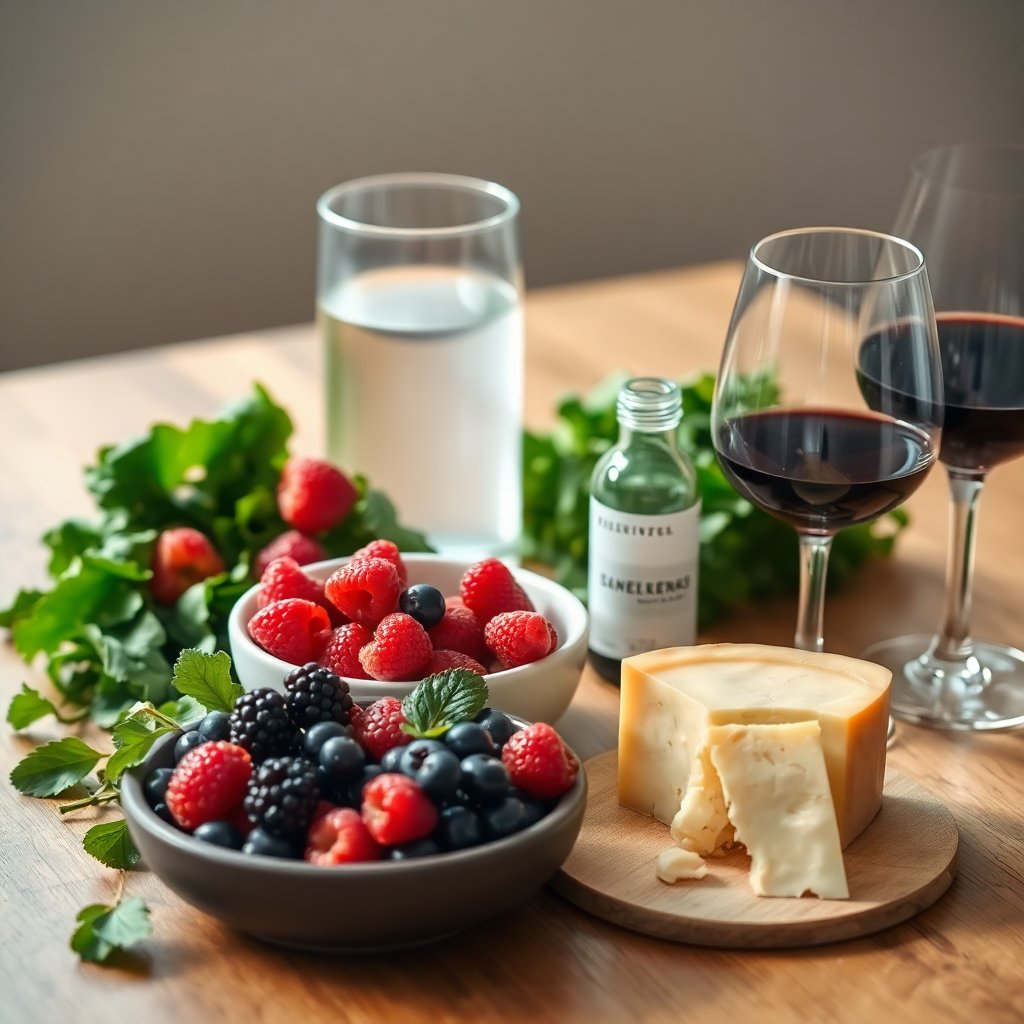
Pour a glass of red wine, eat a bowl of leftover curry, or unwrap a wedge of aged cheddar, and within an hour your face flushes, your nose runs, a headache blooms, or your skin prickles with hives. Foods you have eaten happily for decades suddenly seem to turn on you, and it tends to arrive somewhere in your forties, right alongside the other confusing shifts of perimenopause. There is a name floating around online for this pattern, histamine intolerance, and there is a real, if still-emerging, biological reason it may cluster in the menopause transition.
A note before anything else: this article is general information, not medical advice. Histamine intolerance is a contested and under-researched diagnosis, and the symptoms below overlap with many other conditions that need different treatment. This is meant to help you understand what may be happening and have a smarter conversation with your own clinician, not to replace one. Please talk to your doctor before changing your diet or starting any supplement, especially if you take medication or have a health condition.
What Histamine Intolerance Actually Means
Histamine is a normal, useful chemical your body makes and also takes in from food. It helps drive immune responses, regulates stomach acid, and acts as a messenger in the brain. Problems are thought to begin only when histamine accumulates faster than your body can clear it, tipping past your personal threshold.
The main enzyme that breaks down histamine from food in your gut is called diamine oxidase, or DAO. The theory behind histamine intolerance is that when DAO activity is low, or when you take in more histamine than usual, the excess spills over and produces allergy-like symptoms without an actual allergy being present.
Reported symptoms are wide-ranging, which is part of why the picture gets muddy: flushing, hives, and itching; a runny or stuffy nose; headaches or migraines; bloating, nausea, or loose stools; a racing or irregular heartbeat; and sometimes anxiety or trouble sleeping. Because these overlap with so much else, the pattern rather than any single symptom is what tends to raise suspicion.
An honest caveat up front. Histamine intolerance sits in a genuinely grey area of medicine. According to Cleveland Clinic, it is a proposed condition that the American Academy of Allergy, Asthma and Immunology does not officially recognize, and the underlying DAO theory has not been fully validated. One 2023 study even ruled it out in most people who believed it was behind their symptoms. So the responsible framing is this: many women clearly feel more reactive in midlife, the mechanism below is biologically plausible, and it is still far from settled science.
Why Perimenopause May Turn Up the Volume
Here is where the hormone story gets interesting, because estrogen and histamine are tangled together in a couple of specific ways.
Estrogen prods your histamine-releasing cells. Histamine is stored in immune cells called mast cells, which release it when triggered. Estrogen appears to stimulate those mast cells to degranulate and release more histamine. Laboratory research going back two decades has shown estradiol can activate mast cells and prompt them to release histamine and other inflammatory mediators.
Estrogen also slows histamine cleanup. At the same time, higher estrogen levels are thought to suppress DAO, the very enzyme that clears histamine. So estrogen can push the accelerator and ease off the brake at once, which helps explain why histamine sensitivity often feels worst when estrogen surges rather than when it is simply low.
Progesterone normally steadies things. Progesterone tends to stabilize mast cells, calming that histamine release. In perimenopause, progesterone frequently declines earlier and more steeply than estrogen, and the erratic estrogen spikes of these years can leave the histamine system less buffered than it used to be. The result, for some women, is a body that feels more reactive to foods, pollen, and stress than it did a few years earlier. A review of the mechanism, along with a plain-language explanation of how estrogen activates mast cells and suppresses DAO, is summarized by menopause physician Dr. Mary Claire Haver.
None of this means every reactive symptom in midlife is histamine. It means there is a plausible reason some women who never had a problem with wine or aged cheese suddenly do, and why hay fever or hives can flare during these years.
How to Recognize the Pattern
A few features tend to distinguish a histamine-type reaction from a true food allergy or ordinary indigestion, though only a clinician can sort this out properly.
- It is dose-related and cumulative. A little of a trigger food may be fine, while a lot, or several trigger foods stacked in one day, tips you over. This threshold effect is a hallmark and unlike a classic allergy, where even a trace can react.
- The usual suspects repeat. Reactions cluster around high-histamine foods and drinks: red wine and beer, aged cheeses, cured and smoked meats, fermented foods like sauerkraut and kombucha, leftovers that have sat a day or two, plus tomatoes, and for some people chocolate and citrus.
- Symptoms are diffuse, not just gut-deep. Flushing, a stuffy nose, headache, and itchy skin arriving together points more toward histamine than a purely digestive complaint would.
If your main experience is bloating and digestive upset rather than skin and sinus symptoms, it is worth reading our guide to perimenopause bloating and digestive changes first, because far more common culprits should be considered before landing on histamine. Likewise, if headaches are your dominant symptom, our piece on perimenopause headaches and migraines covers the wider range of triggers worth ruling out.
Why a Doctor Comes First
This is the step people skip, and it matters more here than almost anywhere. The symptom list for histamine intolerance overlaps with mast cell disorders, true food allergies, thyroid problems, other GI conditions, and the ordinary symptoms of perimenopause itself. Chasing a histamine diagnosis on your own risks both missing something treatable and needlessly restricting your diet.
A clinician can help rule out allergies and other conditions, and some will consider a supervised low-histamine elimination diet, done for a limited window and then followed by careful reintroduction, as a way to test the theory. Doing that with a registered dietitian matters, because low-histamine eating is surprisingly restrictive and easy to get wrong, and it is not meant to be permanent. Book an appointment rather than experimenting solo if reactions are frequent, severe, involve any breathing difficulty or swelling, or are pushing you toward cutting out large food groups.
Lower-Risk Steps That May Help
Once serious causes are excluded and you and your doctor suspect histamine is genuinely part of your picture, most of the sensible first moves are low-risk lifestyle ones. None of these is a proven cure, and the evidence for the supplements is preliminary, so treat them as experiments to run with your clinician rather than guarantees.
Trim the highest-histamine triggers first. Rather than a drastic elimination, many people start by pulling back on the biggest offenders, aged cheese, cured meats, and alcohol, especially red wine, and by eating food fresher and sooner rather than as day-old leftovers. Cleveland Clinic's overview of the low-histamine diet lays out which foods tend to be higher and lower in histamine and stresses doing it under guidance. A simple structure helps here: keeping a food and symptom log in a plain → Shop a food and symptom tracker journal on Amazon makes real patterns far easier to spot than memory alone, and gives your clinician something concrete to work from. As an Amazon Associate we earn from qualifying purchases.
Ask about DAO enzyme support. Some people take a DAO enzyme supplement before histamine-containing meals, and a small body of research suggests supplemental DAO may reduce symptoms in people with confirmed histamine intolerance, though studies are limited and quality varies. If you and your doctor want to try it, a → Shop DAO enzyme supplements on Amazon is where these typically live, but this is a supportive experiment, not a treatment, and worth clearing first if you take other medications.
Consider quercetin and vitamin C, with realistic expectations. Quercetin, a plant compound, appears in laboratory studies to stabilize mast cells and blunt histamine release, and vitamin C is sometimes used for the same reason; human evidence remains thin. A combined → Shop quercetin with vitamin C on Amazon is a common way people try this, but the honest read is that the promising data is mostly from cells and animals, not large human trials. Do not expect miracles, and check for interactions with your doctor or pharmacist.
Cook and shop with histamine in mind. Because histamine builds as food ages, freezing leftovers promptly, buying fresher meat and fish, and cooking at home give you more control. A basic → Shop a low-histamine cookbook on Amazon can make the practical side less daunting while you figure out your own thresholds with professional input.
Tend the usual foundations. Sleep, stress, and gut health all influence how reactive the body feels, and stress itself can trigger mast cells. The unglamorous basics that help across perimenopause, steady sleep, movement, and stress management, are reasonable low-risk bets here too. If anxiety is riding alongside your physical symptoms, our guide to perimenopause anxiety and how to steady it may be a useful companion read, since the mind-body loop runs both ways.
Where Hormone Therapy Fits
Because estrogen sits at the center of this story, women naturally ask whether hormone therapy helps or hurts. The honest answer is that it depends on the individual. For some, smoothing out the erratic estrogen swings of perimenopause seems to calm reactivity, while others report symptoms temporarily flaring when they start, particularly if they are already histamine-sensitive. There is no reliable rule here, and no good clinical trials to point to, so this is very much a personalized conversation to have with a knowledgeable clinician who knows your full history rather than a decision to make from an article.
The Bottom Line
Feeling suddenly reactive to wine, aged cheese, or leftovers in your forties is a real and unsettling experience, and there is a plausible hormonal thread behind it: estrogen appears to both spur histamine release and slow its cleanup, while steadying progesterone fades. That said, histamine intolerance remains a contested, under-studied diagnosis, and the supplements often recommended for it rest on early evidence, so healthy skepticism serves you well. The safe path is unglamorous but sound: see a clinician to rule out the many overlapping causes, test the theory carefully rather than self-diagnosing, lean first on low-risk changes like fresher food and a symptom log, and treat any supplement as a supervised experiment. Your midlife body may simply be asking for a closer look, not a permanent list of forbidden foods.
This article is general information, not medical advice. Talk to your doctor about your own symptoms, especially before starting any supplement, elimination diet, or treatment if you have a medical condition or take medication.
As an Amazon Associate we earn from qualifying purchases. This article contains affiliate links; if you buy through them we may earn a small commission at no additional cost to you.