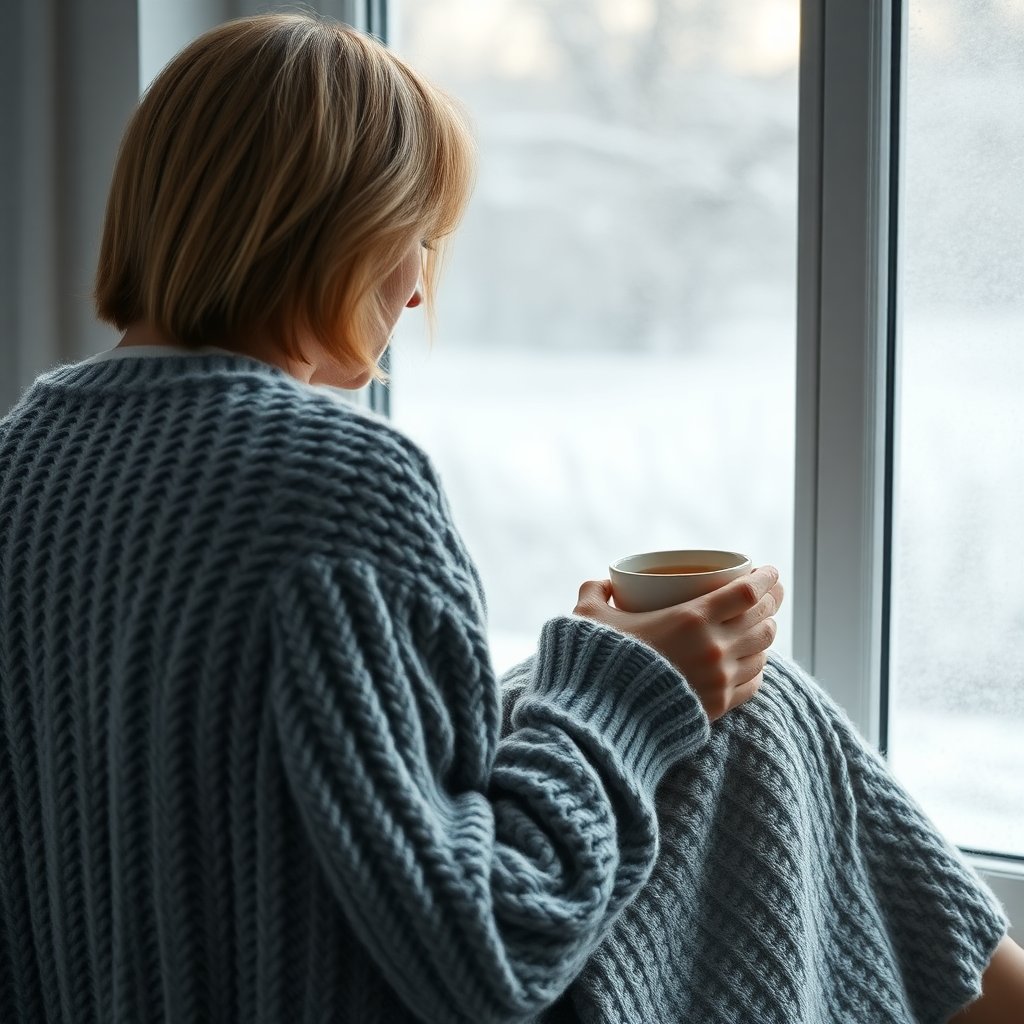
Most of us were warned about hot flashes. Fewer people mention the other half of the story: the wave of cold that can follow. You throw off the covers in a sweat, and ten minutes later you are shivering and pulling them back up. Or you feel a sudden chill at your desk with no hot flash at all. And as November turns colder, some women notice they simply cannot get warm the way they used to.
If that sounds familiar, you are not imagining it. Chills and so-called "cold flashes" come up often in perimenopause conversations, and there are some reasonable explanations for them. This guide walks through what may be happening, the signs that point to something other than hormones, and the practical comfort strategies that many women find helpful through the winter.
Please note: this article is general information and not medical advice — talk to your doctor about your own symptoms, especially if they are new, persistent, or come with other changes in how you feel.
As an Amazon Associate we earn from qualifying purchases. We only mention product types that are relevant to the topic, and none of them treat or cure perimenopause symptoms.
What Chills and Cold Flashes Feel Like
Women describe them in a few different ways:
- The post-flash chill. A hot flash ends, the sweat on your skin starts to cool, and suddenly you are cold, sometimes shivering.
- A cold flash on its own. A sudden wave of cold, goosebumps, or shivering that is not tied to an obvious hot flash.
- Cold hands and feet. Fingers and toes that feel icy even when the rest of you is comfortable.
- Generally feeling colder. A sense that your "thermostat" has shifted and you need more layers than you used to.
The first type is the most clearly connected to perimenopause. The others are reported often, but they also overlap with other common health issues, which is why the pattern matters.
Why This May Happen in Perimenopause
A thermostat that is easily thrown off
Researchers believe hot flashes are linked to changes in how the brain regulates body temperature as estrogen levels fluctuate. The temperature "comfort zone," sometimes called the thermoneutral zone, appears to narrow. Small changes in core temperature that once went unnoticed can trigger the body to dump heat quickly through flushing and sweating. Cleveland Clinic's overview of hot flashes explains this process in plain language.
When the body overshoots and releases more heat than it needed to, a chill can follow as it tries to correct.
Evaporating sweat
This one is simple physics. Sweat cools you as it evaporates, which is the whole point. But if you are lying in damp sheets or wearing a wet top after a night sweat, that cooling keeps going after the flash ends. Damp fabric against the skin can leave you shivering. Our guide to perimenopause night sweats covers bedding and sleepwear that help keep you drier overnight.
Sleep loss and stress
Poor sleep and stress can both affect how you experience temperature, energy, and circulation. If hot flashes are breaking up your nights, you may feel more run-down and colder during the day. See our article on perimenopause sleep problems and hot flashes for strategies that may help.
Anxiety and adrenaline
Some women notice chills along with a racing heart or a jolt of anxiety. A surge of stress hormones can cause shivering, goosebumps, and cold hands as blood flow shifts. If episodes feel like panic, mention that to your doctor too.
When It Might Not Be Perimenopause
This is the most important part. Feeling cold is a nonspecific symptom, and several common conditions in midlife can cause it. Pay attention to the pattern:
More consistent with perimenopause: chills that come in waves, often right after a hot flash or night sweat, with comfortable stretches in between.
Worth checking with your doctor: feeling cold most of the time, especially along with other changes.
Some conditions to be aware of:
- Underactive thyroid (hypothyroidism). Thyroid problems become more common in women at midlife, and their symptoms overlap a lot with perimenopause. The NIH's hypothyroidism overview lists feeling cold, fatigue, weight gain, dry skin, and thinning hair among the common signs. The University of British Columbia's Centre for Menstrual Cycle and Ovulation Research has a helpful explainer on why perimenopause and thyroid problems are easy to confuse.
- Iron deficiency or anemia. Heavy or irregular periods, which are common in perimenopause, can lower iron stores over time. Low iron can leave you tired, short of breath, and cold. If your periods have become heavier, our guide to perimenopause irregular periods covers what is typical and what to report.
- Circulation issues such as Raynaud's phenomenon, where fingers or toes turn white or blue in the cold.
- Infection. Chills with a fever, body aches, or feeling unwell are a sign of illness, not a hormone shift.
- Medication side effects or low blood sugar.
A doctor can often sort these out with a history and simple blood tests, such as thyroid function and a blood count or iron panel. Do not try to self-diagnose or start thyroid or iron supplements without testing; too much iron, for example, can cause its own problems.
Seek prompt care if chills come with a fever, chest pain, shortness of breath, confusion, fainting, or a fingertip or toe that stays pale, blue, or numb.
Practical Ways to Stay Comfortable
None of these treat the underlying hormone changes, but they can make day-to-day life much more comfortable, especially in winter when you are swinging between a warm flash and a cold room.
Dress in removable layers
The goal is to adjust quickly in both directions. A thin, moisture-wicking base layer pulls sweat away from your skin, so you cool down less sharply after a flash. Top it with a light cardigan or zip fleece you can take off and put back on in seconds. Cotton holds moisture; merino wool and technical fabrics tend to dry faster.
→ Shop moisture-wicking base layers for women on Amazon
Make your bed adjustable too
Night is often the hardest time. A few things that may help:
- Layer blankets instead of using one heavy comforter, so you can kick one off during a flash and pull it back during the chill.
- Choose breathable, wicking sheets that dry quickly.
- Keep a spare top by the bed so you can change out of a damp one instead of lying in it.
- Consider a dual-zone heated mattress pad or blanket if you share a bed with someone who runs warm or cold. It lets you warm up after a chill without heating the whole room.
→ Shop dual-zone heated mattress pads on Amazon
Keep hands and feet warm
Warm socks, slippers with a sole, and fingerless gloves for desk work make a noticeable difference for many women. Rechargeable hand warmers are handy for outdoor errands and cold offices.
→ Shop rechargeable hand warmers on Amazon
Warm drinks and regular meals
A warm, caffeine-free drink can be comforting during a chill. Regular meals with some protein can help you avoid the shaky, cold feeling that sometimes comes with long gaps between eating. If you notice that caffeine or alcohol seem to trigger your hot flashes, which some women do, that is worth tracking.
Move your body
Regular activity supports circulation, sleep, and mood. Even a brisk ten-minute walk can warm you up. Strength training also helps maintain muscle, which generates body heat.
Track your episodes
A simple log of when chills happen, what you were doing, and whether a hot flash came first is useful information for your doctor. It also helps you spot your own triggers. Note your periods, sleep, and energy, too.
Talking With Your Doctor
It is worth booking an appointment if chills or feeling cold are bothering you, especially if you also notice:
- Fatigue that does not lift with rest
- Heavier periods or signs of low iron
- Weight changes, dry skin, or hair thinning
- Hot flashes and night sweats that are disrupting your sleep or work
Hormone therapy and some non-hormonal prescription options are available for moderate to severe hot flashes and night sweats, and treating the flashes may reduce the chills that follow them. Whether any of these are right for you depends on your health history. Ask your doctor about the benefits and risks for your situation.
Frequently Asked Questions
Are cold flashes a real perimenopause symptom? Many women report them, and chills after hot flashes are commonly described. Research on cold flashes on their own is limited, so it is worth checking for other causes if feeling cold is persistent.
Why do I shiver after a hot flash? Most likely because your body released a lot of heat quickly and sweat is still evaporating from your skin. Damp clothes and sheets make it worse.
Could it be my thyroid? It could. Thyroid problems are common in midlife women and can cause feeling cold, fatigue, and weight changes. A simple blood test can check.
Is it safe to use a heated blanket? For most healthy adults, a modern heated blanket used according to the manufacturer's instructions is fine. Avoid falling asleep on high heat, and talk to your doctor first if you have diabetes, nerve problems, or reduced sensation.
The Bottom Line
Perimenopause can make your internal thermostat unpredictable, and chills after hot flashes are a common, frustrating part of that. Layer smartly, keep your bed adjustable, stay dry at night, and keep your hands and feet warm. Just as important, pay attention to the pattern: cold that comes in waves after hot flashes points toward hormones, while feeling cold all the time deserves a check for thyroid, iron, and other causes. This is general information, not medical advice — talk to your doctor about what is right for you.
As an Amazon Associate we earn from qualifying purchases. This article contains affiliate links; if you buy through them we may earn a small commission at no additional cost to you.