Waking up drenched in sweat at 3 AM has become your unwelcome routine. You're not alone — perimenopause night sweats affect up to 85% of women, often starting years before periods stop completely.
Your body's thermostat has essentially gone haywire during this transitional phase. While frustrating, understanding why this happens and having a solid action plan can restore your nights and your sanity.
Why Perimenopause Triggers Night Sweats
Perimenopause night sweats stem from your brain's hypothalamus — your body's temperature control center — becoming hypersensitive to small temperature changes. As estrogen levels fluctuate wildly during perimenopause, this region gets confused signals about when to cool you down.
The North American Menopause Society explains that declining estrogen affects the hypothalamus's ability to regulate body temperature accurately. Your internal thermostat becomes set to a much narrower range — meaning tiny increases in core temperature trigger dramatic cooling responses.
The sweating typically happens during REM sleep when your body temperature naturally rises slightly. Your hypersensitive hypothalamus interprets this normal fluctuation as overheating and floods your system with sweat to cool you down rapidly.
Hormone fluctuations during perimenopause don't follow predictable patterns. Estrogen can spike one week and crash the next, making night sweats unpredictable. Some women experience them nightly for months, while others have clusters followed by symptom-free periods.
Sleep Environment Modifications That Work
Creating a cooler sleep environment provides immediate relief for many women experiencing perimenopause night sweats. Your bedroom becomes a strategic defense against hormonal temperature chaos.
Room temperature should stay between 65-68°F consistently. Even small increases can trigger sweating episodes in perimenopausal women. A → Shop bedroom fan tower on Amazon positioned to create gentle air circulation helps maintain stable temperatures.
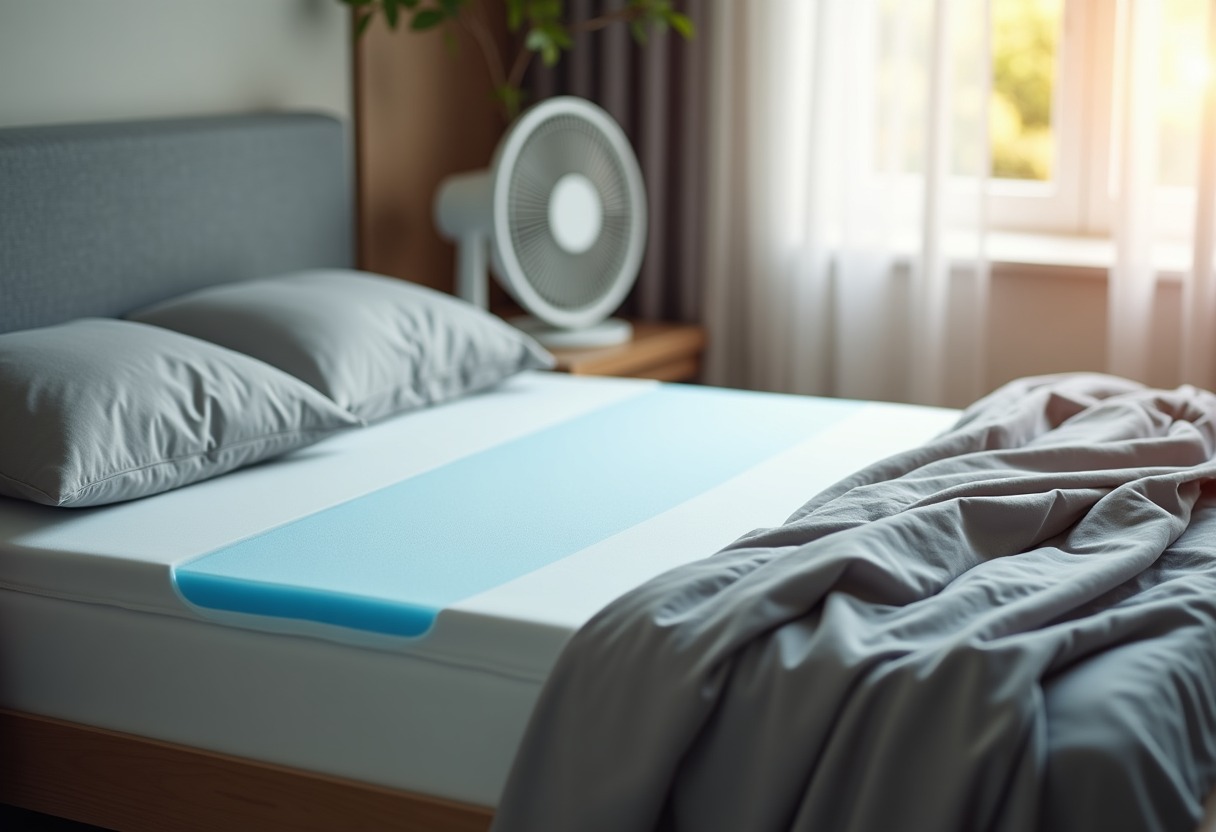
Your mattress and bedding materials make a significant difference. Traditional memory foam traps heat, while gel-infused or latex options sleep cooler. A → Shop cooling mattress pad on Amazon provides an affordable upgrade without replacing your entire mattress.
Moisture-wicking fabrics become essential for both sleepwear and sheets. Cotton feels comfortable but holds moisture against your skin. Bamboo fabric naturally regulates temperature and pulls sweat away from your body. → Shop bamboo pajamas women on Amazon offer breathable comfort that adapts to temperature changes throughout the night.
Multiple thin layers work better than one thick comforter. You can adjust coverage as your body temperature fluctuates without fully waking up. Keep a lightweight throw nearby for easy temperature adjustments.
Evidence-Based Supplement Support
Certain supplements show promise for reducing night sweat frequency and intensity, though results vary among individuals. Research supports several natural options that may help stabilize your body's temperature regulation.
Black Cohosh Perimenopause Does It Work reviews studies showing this herb may reduce hot flash frequency by 20-26% in some women. The effective dose ranges from 20-80mg daily, with results appearing after 4-8 weeks of consistent use.
Magnesium Perimenopause supplementation addresses the mineral deficiency common during hormonal transitions. Magnesium glycinate (200-400mg before bed) supports nervous system regulation and may reduce night sweat intensity while improving sleep quality.
Evening primrose oil contains gamma-linolenic acid, which supports hormone balance. Studies suggest 500-1000mg daily may reduce hot flash severity over 6-12 weeks, though evidence remains mixed.
| Supplement | Daily Dose | Timeline for Results | Key Benefits | |------------|------------|---------------------|--------------| | Black Cohosh | 20-80mg | 4-8 weeks | Reduces hot flash frequency | | Magnesium Glycinate | 200-400mg | 2-4 weeks | Calms nervous system, improves sleep | | Evening Primrose Oil | 500-1000mg | 6-12 weeks | May reduce hot flash severity | | Vitamin E | 400-800 IU | 4-6 weeks | Mild reduction in hot flash frequency |
Ashwagandha Perimenopause supplementation (300-600mg daily) may help your body adapt to stress and hormone fluctuations, potentially reducing night sweat triggers. This adaptogenic herb works best when taken consistently over several months.
Cooling Products That Deliver Results
Strategic cooling products can significantly reduce night sweat disruption when chosen based on your specific patterns and needs.
Cooling pillows address head and neck overheating — common trigger points for night sweats. Gel-filled inserts provide immediate cooling contact, while phase-change material pillows automatically adjust to your body temperature. → Shop cooling pillow insert on Amazon for options that fit inside your existing pillowcase.
Moisture-wicking sheets made from bamboo or Tencel fabrics outperform cotton in temperature regulation. These materials actively pull moisture away from your skin and allow better airflow. → Shop moisture wicking sheets on Amazon in percale weaves rather than sateen for maximum breathability.
Personal cooling devices like bed fans or cooling pads provide targeted relief. Small fans designed for bedside use create personal air circulation without disturbing partners. Mattress cooling systems circulate temperature-controlled air or water through pads placed under sheets.
Cooling towels kept bedside allow quick relief during night sweat episodes. These stay cool when wet and can be refreshed quickly. Having 2-3 available means you're always prepared for unexpected episodes.
Timing and Triggers You Can Control
Identifying your personal night sweat triggers allows you to minimize episodes through strategic lifestyle adjustments. Common triggers include specific foods, stress responses, and evening routines.
Alcohol consumption increases night sweat likelihood significantly. Even one drink with dinner can trigger episodes 4-6 hours later during deep sleep phases. Spicy foods, caffeine after 2 PM, and large meals within 3 hours of bedtime also increase your risk.
Stress management during evening hours reduces night sweat frequency. Perimenopause Brain Fog What It Feels Like discusses how stress compounds hormonal symptoms. Evening meditation, gentle stretching, or calming essential oils from aromatherapy diffusers can help regulate your nervous system.
Exercise timing affects night sweats differently for each woman. Vigorous exercise within 4 hours of bedtime may trigger episodes, while others find gentle evening yoga helpful for temperature regulation. Track your patterns to find what works for your body.
Room preparation should begin 2-3 hours before bedtime. Lower thermostats, turn on fans, and ensure proper ventilation. This proactive approach prevents your bedroom from accumulating heat throughout the evening.
FAQ
How long do perimenopause night sweats typically last? Night sweats during perimenopause can persist anywhere from 2-10 years, with most women experiencing them for 4-5 years on average. The duration depends on your individual hormone fluctuation patterns and overall health. Some women find they intensify in the year before menopause, while others see gradual improvement as hormones stabilize. Tracking your patterns helps predict when relief might come naturally.
Can certain medications make perimenopause night sweats worse? Yes, several common medications can intensify night sweats during perimenopause. Antidepressants, particularly SSRIs, blood pressure medications, and some over-the-counter pain relievers can affect your body's temperature regulation. Steroids and thyroid medications also commonly trigger increased sweating. Never stop prescribed medications without consulting your doctor, but discussing alternatives or timing adjustments might help reduce night sweat severity.
Should I wake up and change clothes during a night sweat episode? Changing into dry clothes and switching to fresh sheets when possible helps prevent extended discomfort and skin irritation. However, the act of getting up and moving around can sometimes trigger additional sweating episodes. Keep lightweight pajamas and a towel bedside for quick changes without fully waking. Some women find that staying still and using a cooling towel works better than changing clothes completely.
Are night sweats different from hot flashes during sleep? Night sweats and nocturnal hot flashes are essentially the same physiological response — your body's attempt to cool down rapidly. The terms are often used interchangeably, though night sweats specifically refers to the sweating that accompanies the hot sensation. Both involve the same hypothalamic response to hormone fluctuations. The main difference is that night sweats emphasize the moisture aspect, while hot flashes focus on the heat sensation.
How do I know if night sweats are from perimenopause or something else? Perimenopause night sweats typically begin in your 40s and coincide with other symptoms like irregular periods, mood changes, or sleep disruption. They often follow patterns related to your menstrual cycle early in perimenopause. If night sweats start suddenly, occur with fever, weight loss, or other concerning symptoms, or happen in women under 40 without other perimenopause signs, consult your healthcare provider to rule out other conditions like thyroid disorders or infections.
The combination of environmental modifications, targeted supplements, and strategic cooling products offers real relief from perimenopause night sweats — you don't have to suffer through years of disrupted sleep waiting for hormones to stabilize.
Some links on this page are affiliate links. We may earn a small commission if you purchase through them, at no extra cost to you.
As an Amazon Associate we earn from qualifying purchases. This article contains affiliate links; if you buy through them we may earn a small commission at no additional cost to you.