Bone is quiet. You cannot feel it thinning, there is no ache or twinge to warn you, and most women have no idea anything has changed until a wrist gives way in a minor fall or a routine scan turns up a surprising number. That silence is exactly why bone health deserves attention during perimenopause, because the years around your final period are when bone loss quietly speeds up, and they are also the window when the choices you make matter most.
A note before anything else: this article is general information, not medical advice. Bone health is genuinely individual, shaped by your genetics, medical history, medications, and other conditions, and only your own clinician can assess your risk and tell you what is right for you. Please treat what follows as a way to have a smarter conversation with your doctor, not a substitute for one, and talk with them before starting any supplement or new exercise program.
Why Bone Loss Accelerates in Perimenopause
Your skeleton is not a static scaffold. It is living tissue that is constantly torn down and rebuilt in a process called remodeling, with cells that break old bone away and cells that lay new bone down. For most of adult life those two crews stay roughly in balance. Estrogen is one of the key managers keeping them that way, because it helps restrain the cells that dissolve bone.
As estrogen production becomes erratic and then declines through the menopause transition, that restraint loosens. Bone breakdown begins to outpace bone formation, and the net result is a gradual loss of bone density. According to the Mayo Clinic, the drop in estrogen at menopause is one of the strongest risk factors for the bone-thinning disease osteoporosis, which is why women develop it far more often than men.
The timing is what surprises people. Commonly cited estimates suggest bone loss accelerates in the couple of years before the final period and continues at a faster clip for several years after, with women losing a meaningful share of their bone density during this relatively short window. The exact figures vary from person to person, but the pattern is consistent enough that experts treat perimenopause and the early postmenopausal years as a critical period rather than a distant worry for old age.
Osteoporosis Is Called a Silent Disease for a Reason
Here is the uncomfortable part. Thinning bone produces no symptoms you can notice on your own. There is no pain, no stiffness, no signal. The first sign for many women is a fracture that happens with surprisingly little force, a broken wrist after a stumble, a cracked rib, or a vertebra in the spine that compresses and causes height loss or a stooped posture over time.
That is why bone health is one area where waiting to feel something is the wrong strategy. The National Institute of Arthritis and Musculoskeletal and Skin Diseases describes osteoporosis as a condition that often progresses without symptoms until a bone breaks, and stresses that prevention and early attention matter precisely because the disease is so quiet. The good news buried in that fact is that the years before any of it shows up are exactly when protective habits do the most good.
Knowing Your Risk and When to Get Screened
Some risk factors for weaker bones are outside your control, and knowing yours helps you and your doctor decide how closely to watch. A family history of osteoporosis or a parent who broke a hip, a slight or small-framed build, certain medications such as long-term steroids, and some medical conditions all raise risk. So does early menopause, whether natural or from surgery, because it means more years of life with lower estrogen.
Bone density is measured with a painless scan called a DEXA, which produces a score comparing your bone to a healthy young-adult reference. General guidance has long recommended routine screening for women at 65, and earlier for those with added risk factors, but the right timing for you is a personal call. If you are in perimenopause with a family history of fractures, a very thin build, or other red flags, it is worth asking your clinician whether an earlier baseline scan makes sense rather than assuming screening is only for later. The Bone Health and Osteoporosis Foundation offers plain-language guidance on risk factors and screening that can help you frame that conversation.
Because estrogen sits at the center of the story, many women also ask whether hormone therapy protects bone. It can, and preserving bone density is one of its recognized benefits, but whether it is appropriate depends on your full health picture, timing, and personal risks, so it belongs in a detailed discussion with a knowledgeable clinician rather than a decision made from an article.
The Foundations That Actually Protect Bone
Once you understand that perimenopause is a window rather than an emergency, the day-to-day steps are reassuringly ordinary. None of them is a miracle, and none replaces medical care if you are found to have low bone density, but together they give your skeleton the best odds.
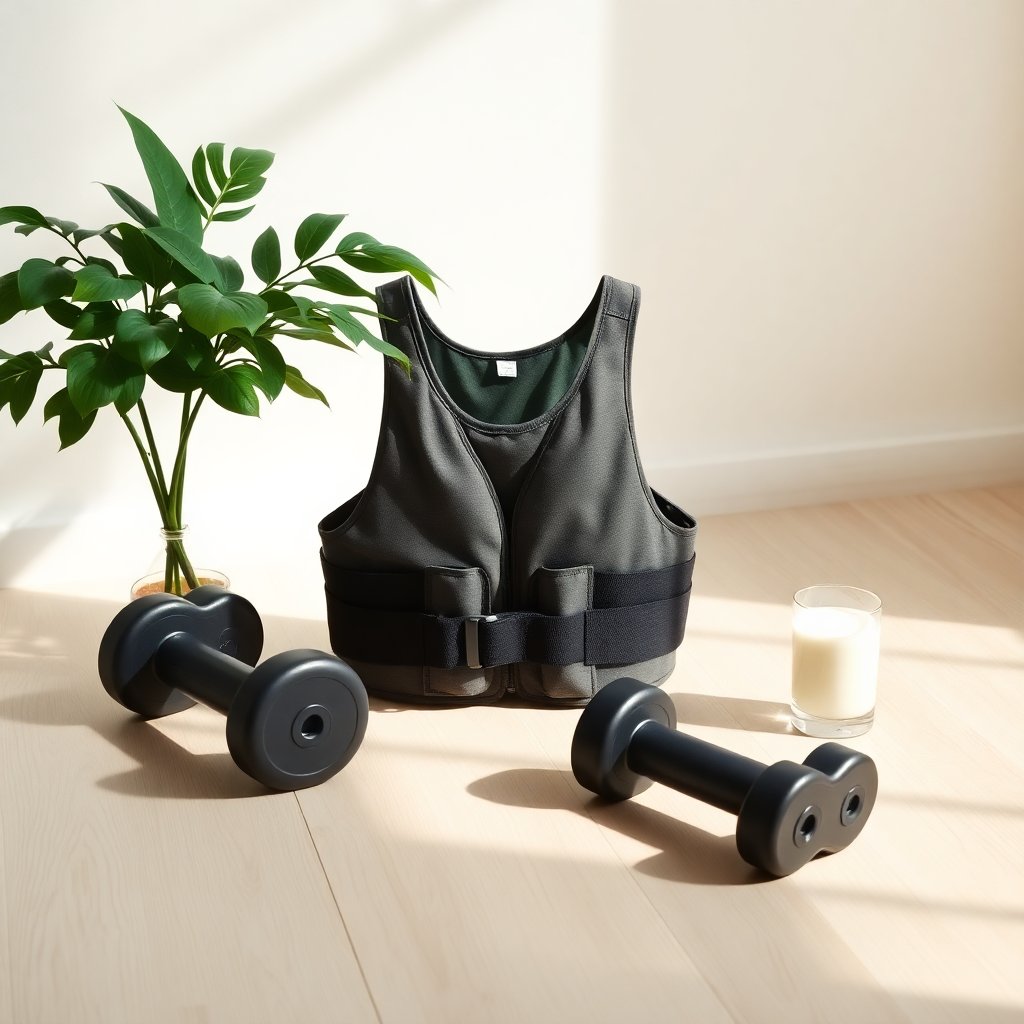
Load your bones with weight-bearing and resistance exercise. Bone responds to being stressed in a good way. Weight-bearing movement, where you are on your feet working against gravity, and resistance training, where muscles pull on bone, both signal your body to maintain and build bone tissue. Strength work does double duty by building the muscle and balance that help prevent the falls that cause fractures in the first place. If you are starting from scratch, a simple set of → Shop adjustable dumbbells on Amazon makes progressive strength training doable at home. Our companion guide on protein, creatine, and strength training in perimenopause goes deeper on building the muscle that supports your frame.
Consider added load for walks, carefully. Wearing a weighted vest during walks has become a popular way to add gentle bone-loading stress, and the idea of loading the skeleton to encourage it to stay strong is biologically sound. Start light and build slowly, especially if you have any back, joint, or balance issues, and clear it with a professional if you are unsure. A basic adjustable → Shop a weighted vest on Amazon lets you begin with modest weight and increase gradually rather than overdoing it early.
Get enough calcium, ideally from food. Calcium is the raw material of bone, and needs rise in midlife. National nutrition guidance commonly puts the target around 1,000 milligrams a day for women through age 50 and about 1,200 milligrams after that, spread across the day. Food sources such as dairy, fortified plant milks, tinned fish with soft bones, tofu, and leafy greens are the preferred way to get there, and supplements are best reserved for filling a genuine gap rather than as a default. If you and your doctor decide a supplement helps close that gap, a modest → Shop a calcium supplement on Amazon is one option, but more is not better here, and megadoses carry their own risks, so aim for your target rather than piling it on. As an Amazon Associate we earn from qualifying purchases.
Do not overlook vitamin D. Calcium is of little use if your body cannot absorb it, and vitamin D is what makes that absorption possible. Many women run low, particularly in darker months or at higher latitudes, and a blood test can show whether you actually need to supplement rather than guessing. If your clinician recommends it, a straightforward → Shop a vitamin D3 supplement on Amazon is the common way to top up, though the right dose depends on your levels and should be guided by your test results and your doctor.
Eat enough protein and mind the rest of the diet. Bone is not just minerals; its underlying framework is protein, the same collagen scaffolding that estrogen loss also affects elsewhere in the body, which is part of why some women notice their skin changing during perimenopause around the same time. Getting adequate protein across the day supports both muscle and bone. It also helps to go easy on heavy alcohol intake and to not smoke, since both are linked to weaker bones.
Putting It in Perspective
It is easy to read a list like this and feel behind, but the honest framing is more encouraging. Bone loss around menopause is normal and expected, not a personal failing, and the point of paying attention now is simply that early, steady effort pays off more than a scramble later. The very silence that makes thinning bone easy to ignore is also why the unglamorous basics, moving with intention, feeding your bones well, checking your vitamin D, and knowing your family history, are quietly powerful when you start them in your forties rather than your seventies.
Perimenopause reshapes a lot at once, from mood and sleep to unexpected shifts like new sensitivities and reactions, and bone health rarely makes noise amid the louder symptoms. That is exactly why it is worth a deliberate look. Book the conversation with your clinician, ask where you stand and whether a baseline scan is wise for you, and treat the daily habits above as a long game. Your future self, decades from now, is the one who benefits from the quiet work you do today.
This article is general information, not medical advice. Talk to your doctor about your own bone health, risk factors, and whether any supplement, screening, or exercise change is right for you, especially if you have a medical condition or take medication.
As an Amazon Associate we earn from qualifying purchases. This article contains affiliate links; if you buy through them we may earn a small commission at no additional cost to you.